
Strategic Planning
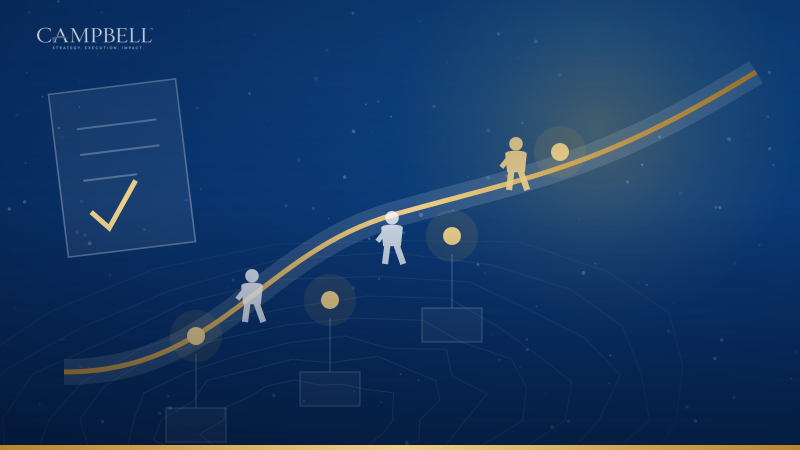
Your Nonprofit Has a Mission. Does It Have a Plan?
A mission tells people why you exist. A strategic plan tells your team what to do about it this year, and how you will know whether it worked.
7 min readRead Article →
Strategy, program design, performance measurement, grants, governance, and operations — written for the people who have to make these decisions with real constraints and finite capacity. No theory for its own sake, and nothing you cannot act on this quarter.
Filter by topic, or read straight through. Every article ends with an open invitation to a free consultation.
A mission tells people why you exist. A strategic plan tells your team what to do about it this year, and how you will know whether it worked.
Board approval is the midpoint of a strategic plan, not the finish line. What happens in the ninety days afterward determines whether the plan becomes an operating system or a binder.
Most declined proposals are not rejected because the program was weak. They are rejected because the organization could not document, on deadline, what it was already doing well.
Most programs are not designed. They accumulate. Seven questions, answered honestly before launch, prevent the most expensive mistakes.
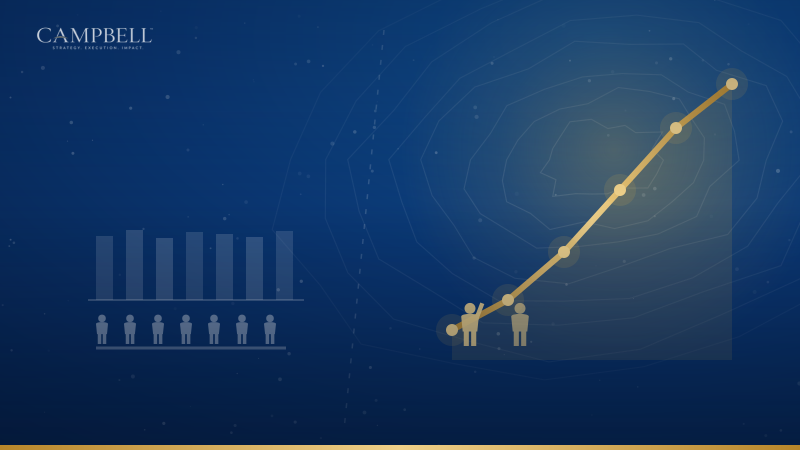
Counting the people you served tells a funder how busy you were. It does not tell them whether anything changed. Here is the difference, with examples.
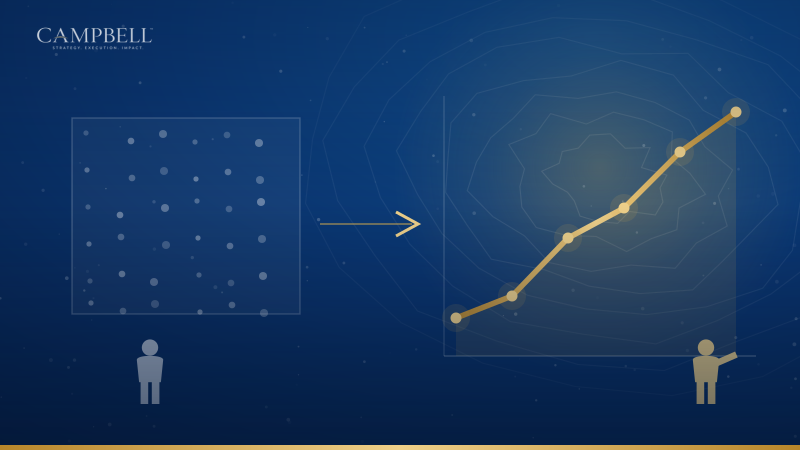
You do not need a database, a dashboard vendor, or a data analyst to start. You need five measures, one owner each, and a spreadsheet you actually maintain.
The informal processes that carried you to twelve staff will not carry you to thirty. Here are the warning signs, and what to document first.
Most nonprofits underprice their own programs, then wonder why growth makes the budget harder. Full cost includes staff time you are not counting.
Most board-staff friction is not a personality problem. It is an unwritten role agreement, and it can be fixed in one working session.
The difference between a consulting engagement that changes an organization and one that produces a report is mostly decided by the client, before the work starts.
Nonprofits rarely fail for lack of good ideas. They stall because nobody owns the work, the sequence was never mapped, and the finish line was never defined.
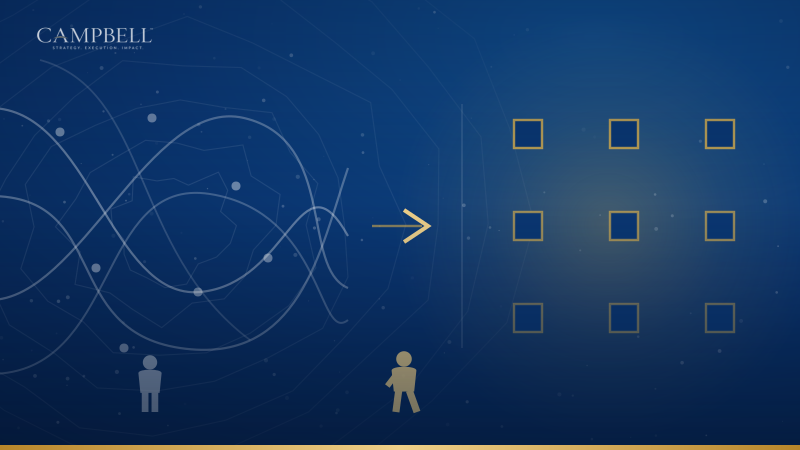
You cannot forecast a grant decision or a policy change. You can decide, in advance and calmly, what you would protect and what you would let go.
No articles in that topic yet.
Bring the problem you are actually facing. A consultation is free, carries no obligation, and is a conversation rather than a sales call.